
Author: Mignon Nel (page 1 of 1)

Topic 3: Learning in Communities – Networked Collaborative Learning

As someone who generally prefers to work alone, process information independently and gather my thoughts away from a crowd, the thought of collaborative learning has never sparked excitement. However, there have been times where I have found value in collaborative learning and have benefitted from the diverse perspectives and experiences of those within a community or larger network. Being aware of the differences between community and networked collaborative learning also helps to position yourself, or your students, within these groups with an understanding of the benefits, drawbacks and varying focuses of each.

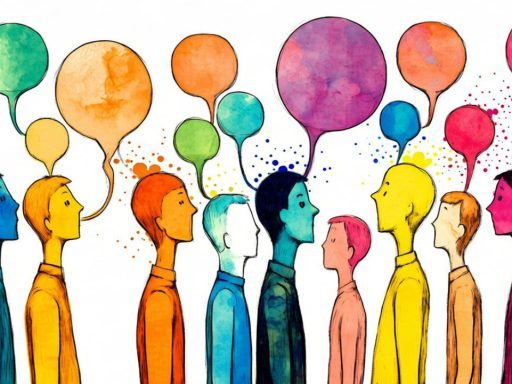
Community learning takes place within a group that shares some element of emotional connection, influence, membership or need fulfillment. These learning communities share experiences and value contribution and connection (Adams, 2022). Our PBL group discussions further revealed that community learning emphasises a sense of belonging, trust, shared identity or context and usually consists of a more stable or long-term group of people who learn together.

Networked learning takes place when people come together and learn or problem-solve through connections, with knowledge flowing in all directions. The network crosses boundaries and is characterised by ever expanding connections (Sadki, 2025). Our PBL group discussions agreed that networked learning often consists of groups that have less shared context or connection and focus more on collaboration across boundaries. Group members may come and go more frequently and benefit from sharing knowledge across diverse perspectives, areas of expertise and even cultures.

Both types of collaborative learning rely on communication, participation and mutual sharing to contribute to knowledge creation. The designations of community or network may also become interlinked, as a network can become a closer community through prolonged interaction and closer relationship building. The safety and trust of a close community group can help to facilitate effective group thinking. Ringer et al. (2022) explain that group participants should feel safe to participate freely and share their thoughts for collective thinking to take place. However, certain patterns, beliefs, cultural norms or assumptions may inadvertently exist in a group and can limit the discussion or analysis of certain topics. In such a situation, the introduction of an external person who identifies this type of topic-blindness can help to address this shortcoming. This demonstrates the value of expanding community learning groups to incorporate wider networks.

What about those who do not enjoy collaborative learning, sharing in a community or networking? Árnason et al. (2017) recommend explicitly discussing various modes of participation within a group to bring attention to the diversity of approaches or roles that students can take on within a group. Collaboration doesn’t have to look the same for everyone, and tasks or courses can be designed to be inclusive of different personality types, allowing contribution in different ways.

It is encouraging to know that community learning can be inclusive of all personality types. Recognising that each individual can contribute and participate in a unique way, helps to break down the barriers to sharing diverse perspectives and knowledge. Thus, opening the benefits of community learning to everyone.

References

Adams, S.R. (2022). EBSCO research starter: learning community.

Árnason, H., Creelman, A., Eklund, C., Grubbe, J., Kekkonen, T., Knudsen, A., Ruge, B., & Slåtto, T. (2017). Silent learners – a guide.

Ringer, M., Gordon, R., & Vandenbussche, B. (2022). Igniting the collective spark: The relevance of thinking together, in: The collective spark: Igniting thinking in groups teams and the wider world. (pp. 8–21). Grafische Cel.

Sadki, R. (2025). What is networked learning? Learning Foundation.

Topic 2: Open Learning – Sharing & Openness

I have often heard open learning being framed in a positive way, or as something that should be promoted and invested in. However, after delving into this topic, it has become evident that a balanced view is needed when approaching open learning and sharing. There are many benefits of open learning to consider, however, as the webinar by Teresa MacKinnon highlighted, there are also a number of potential risks that should not be ignored.

The motivations for sharing or not sharing open education resources (OER’s) emerged as an important topic during our group discussions. When I think of the motivations that encourage the sharing of OER’s, the first thing that comes to mind is the promotion of equality in education and access to knowledge. This may be because I approach the subject from a South African perspective, where socio-economic divide greatly influences inequality in education (Böhmer & Murru, 2025). However, during discussions it was interesting to note that this may not be as big of a motivator for all countries. In countries where students and educators have more equal access to educational resources, motivators for sharing OER’s may lean more towards increasing personal or institutional visibility, outreach, or reputation building.

On the other side, concerns regarding how material could be used or how poor-quality derivatives may reflect the original creator can overshadow positive motivations for sharing OER’s. For example, despite the protection offered by Creative Commons (CC) licenses, there is still a concern about how materials can be used by artificial intelligence (AI). Those who don’t want their work to be used by AI, may refrain from sharing entirely (Creative Commons, 2026).

Another important aspect, which resulted in much discussion, relates to the need for mechanisms that ensure quality and oversight. I, like a few others, originally held the view that a peer-review process is required to ensure credible content. However, the affiliation of the creator or other means of establishing authority can also serve as valid markers of credibility. It was noted that not all OER’s are good OER’s, and some form of editorial overview or expert guidance can be valuable to ensure quality. With this in mind, information and digital literacy skills become vital on the part of the OER user, to evaluate the quality, credibility and reliability of open learning resources.

Receiving constructive user feedback or allowing user annotations was also shared as a possible tool for checking the accuracy of content in OER’s and reducing the need for revision. However, this also brings the potential risk of harmful commentary and negative criticism, which can increase reluctance to participate in sharing and openness.

Open learning can provide many benefits to both the sharer and the content user. However, it is important to weigh these benefits against the potential risks when participating in sharing and openness. Maintaining a balanced view can help to set realistic expectations and informs the way that sharing takes place, the audience that it caters for, the platforms that are used, the kinds of permissions that are allowed, or which CC licences are applied. Ultimately an informed, balanced view allows for successful open learning.


References

Böhmer, B., & Murru, A. C. (2025). Policy Brief: Learning Gaps by Socio-Economic Status and Gender in South Africa. 

Creative Commons. (2026). Guidance on using CC licenses in an AI ecosystem.


Topic 1: Online Participation & Digital Literacies

With the first topic prompting discussion and investigation into ideas related to digital literacies and online participation, I found it interesting to experience a new way of participating online first-hand.

Although I have done many different online courses in the past (LinkedIn Learning, Coursera, EdX, and even a degree), the way that this particular course is offered was new to me. Attending group discussions, investigating and then sharing different perspectives and experiences, presented a new way of learning that I was not used to. To me, this illustrated the kind of adaptability, confidence and willingness to try new things that is needed for digital literacy and online participation.

Digital literacy is not just about being able to use a specific platform; it’s about being able to use it effectively, ethically and safely. The skills required for digital literacy – such as identifying, evaluating, managing and creating information and content – can be applied to a host of platforms or online experiences. In our group discussions we discussed a digital learning ladder framework and the idea that we can learn these skills and build our confidence gradually.

The idea of confidence was highlighted in the scenario as an important aspect of engaging in digital learning and online participation. However, having confidence or capability, as many younger digital natives do, does not mean that you are competent. Reaching a place of competence is also not fixed, as digital literacy should be seen as a journey of life-long learning and a continuum or range of modes influenced by our motivations. As shared by White and Le Cornu (2011), we can exist as both visitors, with defined tasks or goals to complete online, or as residents, who may live a portion of their lives in an online space. This focus on motivation also led our group discussions to consider a variety of motivations in line with a PESTEL framework, focusing on political, economic, social, technological, environmental and legal influences. 

I am reminded by the scenario that fear of judgement, false presumptions, or feelings of low confidence should not hold one back from embarking on a journey of life-long digital learning. Digital literacy and online sharing can start small and grow gradually; you just need to take the first step.


References

White, D. & Le Cornu, A. (2011) Visitors and residents: A new typology for online engagement. First Monday, 16(9).