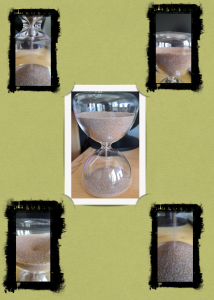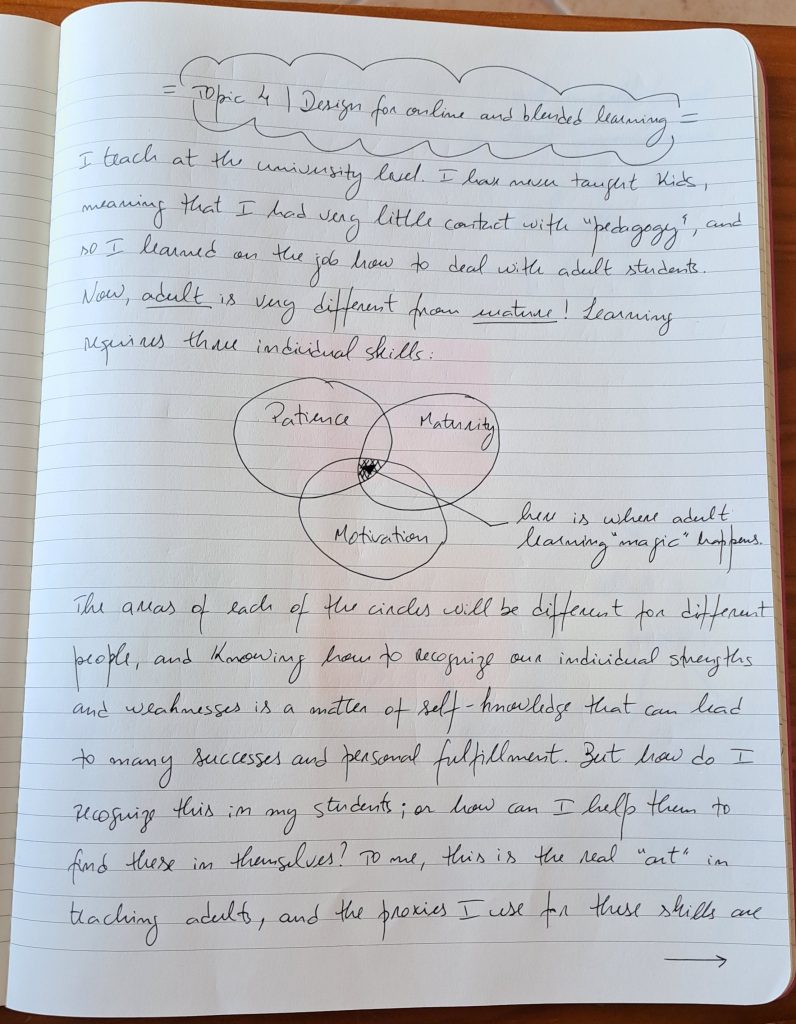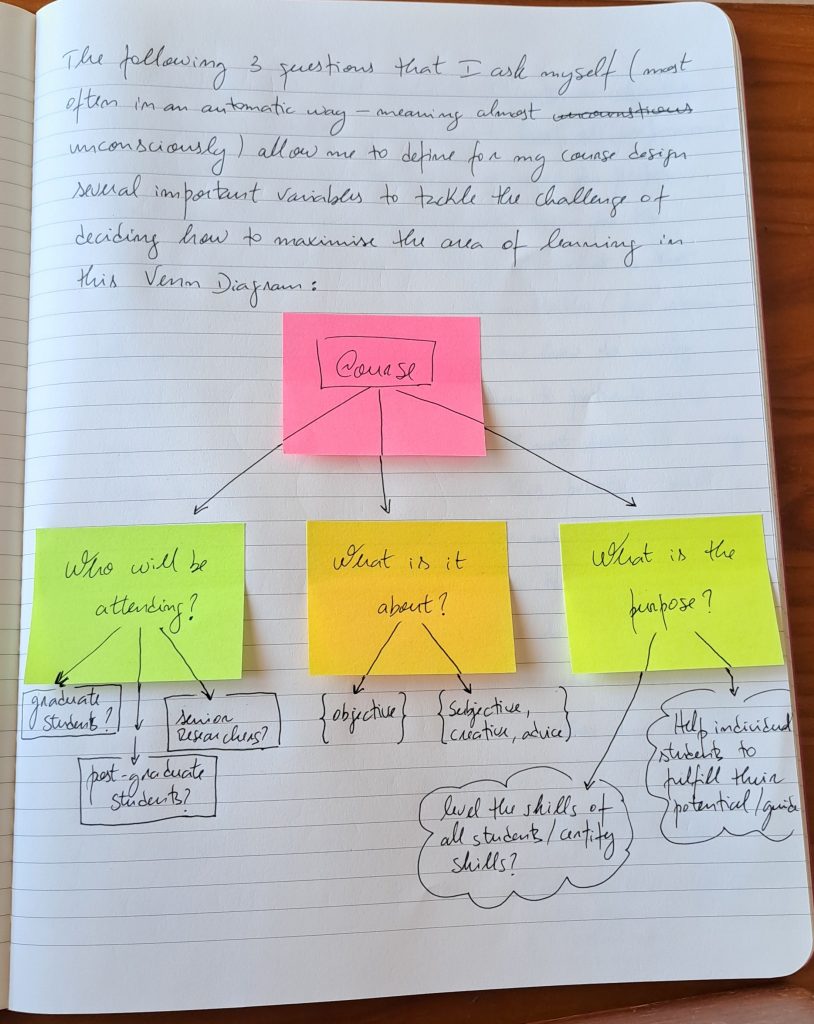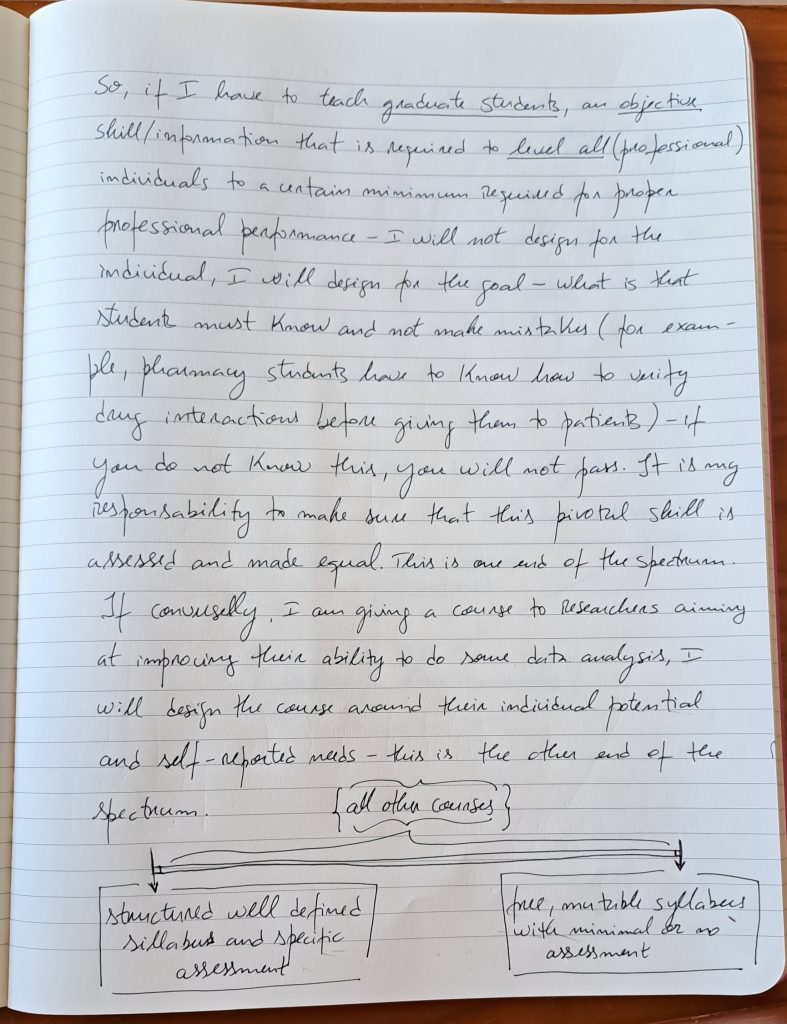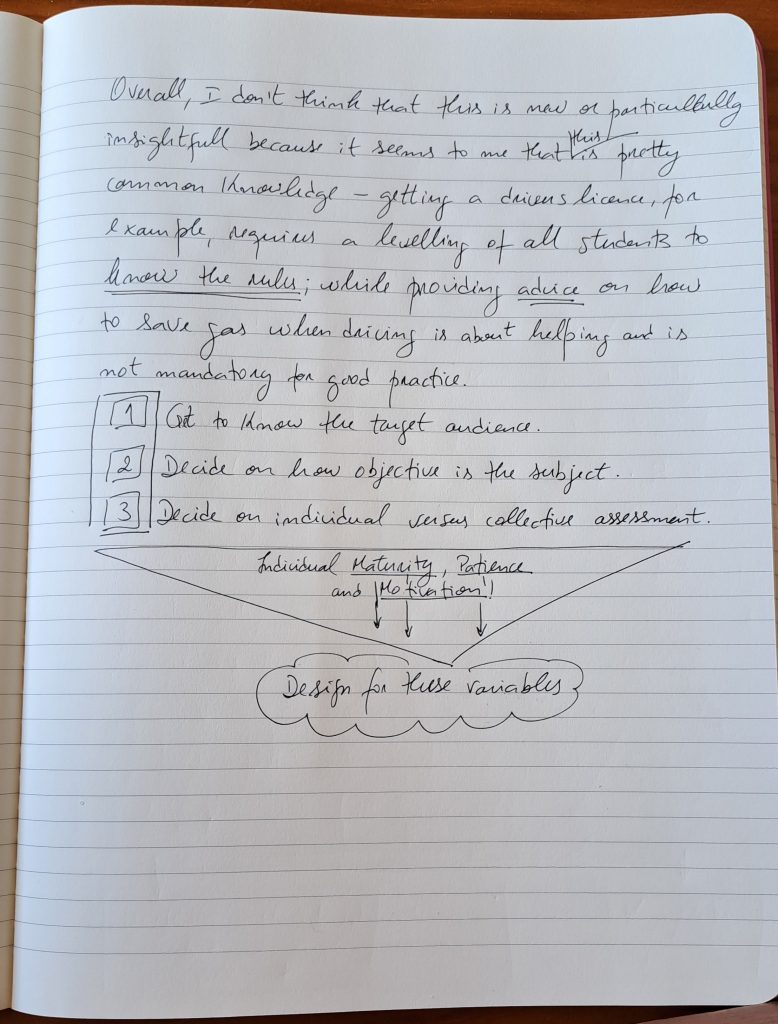
What my learning journey looks like outside of myself. (Isabel Duarte | CC BY-SA)
I joined this course for a reason that took me a while to realize: I have been learning my entire life (across disciplines and languages and tools and ideas). But somewhere along the way I realized that no one had ever taught me how to learn. I had been doing it all along, the way one breathes: automatically, unconsciously, without ever stopping to examine the mechanism. ONL felt like a chance to finally look at the mechanism.
There is a quote attributed to Socrates that has stayed with me:
“I cannot teach anybody anything. I can only make them think.”
It sounds gentle until you pause to examine it and feel its full weight: no matter how brilliant the teacher, no matter how generous the explanation, no matter how carefully the content is sequenced and delivered, the actual transfer cannot happen. The knowledge does not travel. What travels is a signal, and the receiver must reconstruct the meaning from scratch, using their own biology. We learn through our senses. We integrate knowledge in our own brains, filtered through our own world view, shaped by our individual histories, strengths and blind spots. We are, in a very real sense, locked inside these genetic bodies, and those bodies are the hardware where the software of knowledge must run. The software cannot install itself. It must be compiled locally, every time, for each person.
Now, I have always experienced learning as loneliness, a solitary journey. You could travel alongside others, you can compare notes, but the walking was always done alone, inside your my own brain, in silence.
Then came my first PBL session in this course, and something changed.
It was not a dramatic shift. Nobody said anything that fundamentally changed a belief I had. But I noticed that the perspectives my group members brought were not simply different versions of the same thought I had been having. They were structurally different. They came from different vantage points, different professional backgrounds, different relationships to vulnerability and to the act of sharing: sharing insecurities versus sharing information versus sharing knowledge, for example. And from where they were standing, they could see things I could not see from where I was.
My learning was still individual. The ideas still had to be processed inside my own head. But the inputs had changed in quality, not just quantity. The group had given me new data that I would never have generated alone, not because I lacked the skills, but because I lacked their position in the world. And that distinction matters enormously beacuse i started to feel (and the word feel is key here) that learning is still individual, but individual does not have to mean solitary.
My focus kept returning to the name of the course: Open Network Learning. All three words important, but the first one kept buzzing in my head.
To participate fully in something like this, i.e. to genuinely benefit from the kind of collaborative learning that PBL enables, you cannot simply be connected to others. You must be open to them. And openness is not a passive state. It is an active, sometimes uncomfortable, practice.
When someone in my group offered a perspective that challenged something I believed, the easy response would have been to quietly nod, save it under “interesting but wrong,” and continue. The harder response (the one that ONL seems to be specifically designed to encourage) is to hold that challenge seriously. To let it in. To ask honestly whether my belief is actually well-founded, or whether it is a comfortable assumption I have carried for so long that I have mistaken it for knowledge.
That is where the pain comes in. Not the dramatic pain of being attacked or embarrassed, but the quiet, low-grade discomfort of having a familiar framework slightly destabilised. It takes maturity (perhaps?) to distinguish between feeling challenged and truly being threatened. It takes real confidence to expose your actual thought process to others: not the polished final result, but the messy, draft, half-formed reasoning, and still remain calm and collected while they respond to it.
And then it hit me, somewhere in the middle of reflecting on this: Learning is teaching oneself. I know it sounds circular, but bear with me, be open to my perspective.
When I genuinely learn something (not just memorize a new fact, but actually restructure my understanding), what is happening biologically is that my neural network is being modified. New connections are forming between previously disconnected nodes. Existing connections are being strengthened, or weakened, or sometimes cut and rebuilt in a different configuration. The rewiring is the learning. And nobody else can do this rewiring for me. The teacher can present the stimulus. The conversation can provoke the insight. The PBL group can illuminate an angle I had not considered. But the actual change in the neural network?! That is mine to make, and mine alone!
This is why the painful moments of learning feel like something is being taken away, even when something is being added. This is because sometimes it is. A concept you have to revise is a concept you have to first partially deconstruct. A belief you genuinely reconsider is a belief you have to hold loosely and from a distance long enough to examine, which means holding it differently than you did before. That is not comfortable. You are challenging yourself (your being, your ego)… however, I am now convinced, this is the sign that learning is actually occurring, rather than merely accumulating.
This brings me to my final reflection: If learning is teaching oneself, then what is teaching?
Probably teaching is just learning turned outward. I am sure this is not a new concept: someone must have studied this and given it a name. But for me, this is a useful realization. When I teach myself, I am drawing the world in: absorbing, filtering, connecting, restructuring. When I teach others, I am doing the reverse: I am externalising my internal structure, putting my connected nodes into language or image or example, and transmitting that signal out so that another person can receive it and build something with it. They will not build the same thing I did. They will build something shaped by their own neurons, their own prior connections, their own history.
What changes between learning and teaching is the direction of the current, and the intention behind it. That’s it.
Writing this reflection is part of that same learning/teaching process. When I write this post, I’m not reporting on what I learned. I’m not teaching anyone. I am in the process of teaching myself through the act of articulation. The writing is the just the external act of thinking (reflecting). And sharing this post openly in a way that invites responses, I am making it possible for someone else to take my ideas and make them their own, necessarily changing it into something different, something that didn’t exist before either of us encountered the other. And that is not a lonely journey. That is a networked one.